How to Tell Time in Spanish: A Beginner's Guide
June 9, 2026 • SpanishNow • 5 minute read
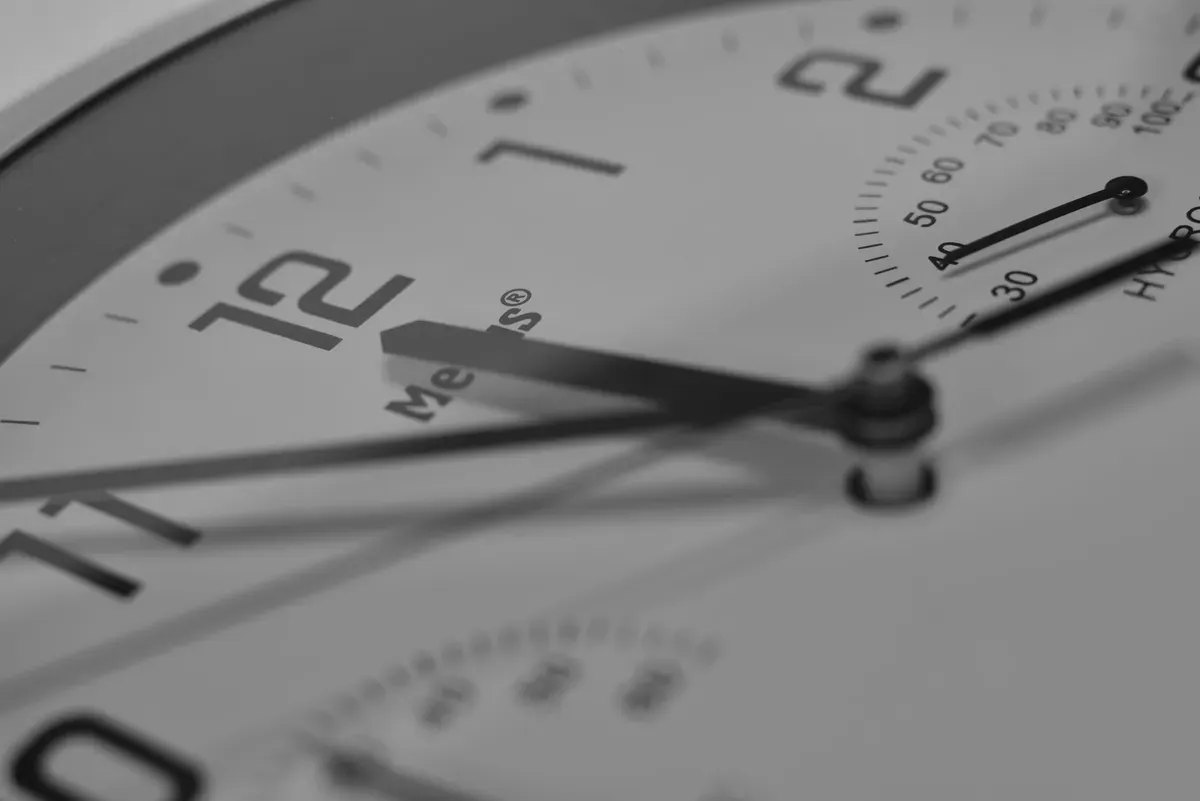
Table of Contents
The first time you try to catch a train in Madrid or ask a stranger when the museum opens, telling time stops being a textbook exercise and becomes survival Spanish. The good news: almost every clock time you’ll ever need fits into a single formula, plus a handful of quirks that trip up English speakers. Learn the pattern once and you can read any clock, digital or analog, out loud.
The one formula you need
Here’s the spine of the whole topic:
[es la / son las] + [hour] + [y / menos] + [minutes or cuarto/media] + (de la mañana/tarde/noche)
The verb is ser (“to be”), and it agrees with the number of the hour. That feels strange at first because English never changes “it’s” — but in Spanish, one o’clock is singular and every other hour is plural. Minutes attach with y (“and”) in the first half of the hour and menos (“minus”) in the second. cuarto means a quarter (15 minutes) and media means half (30). Master those five pieces and you’ve covered roughly ninety percent of everyday cases.
Asking the time: ¿Qué hora es?
Before you can answer, you need to ask. The near-universal question uses the feminine noun hora (“hour”):
| Spanish | English | When |
|---|---|---|
| ¿Qué hora es? | What time is it? | standard everywhere |
| ¿Qué horas son? | What time is it? | parts of Latin America |
| ¿Tienes hora? | Do you have the time? | casual |
| ¿A qué hora? | At what time? | asks when something happens |
That last one matters more than it looks — we’ll come back to it.
The hours: es la una vs son las
Notice there is no word for “o’clock” in Spanish. The article la or las does that job, which is why you can never drop it.
| Spanish | English |
|---|---|
| Es la una. | It's one o'clock. |
| Son las dos. | It's two o'clock. |
| Son las cinco. | It's five o'clock. |
| Son las doce. | It's twelve o'clock. |
Only es la una is singular. From two o’clock on, it’s always son las because the number is plural. Forgetting this — saying es las dos — is the single most common beginner slip.
Minutes: y for past, menos for to
Picture an analog clock split down the middle. On the right half (minutes 1–30, climbing past the hour) you add time with y:
| Spanish | English |
|---|---|
| Son las seis y cinco. | Five past six. |
| Son las dos y cuarto. | Quarter past two. |
| Son las cuatro y media. | Half past four. |
On the left half (minutes 31–59), Spanish does something English doesn’t: it jumps to the next hour and subtracts with menos.
| Spanish | English |
|---|---|
| Son las cinco menos cuarto. | Quarter to five (4:45). |
| Son las ocho menos veinte. | Twenty to eight (7:40). |
| Es la una menos diez. | Ten to one (12:50). |
The leap that confuses everyone is 4:45. It’s not “four something” — it’s son las cinco menos cuarto, “a quarter to five,” because you name the hour that’s about to arrive. And when that next hour is one o’clock, you switch back to the singular: es la una menos diez.
Because every minute is just a number, this whole section leans on counting. If your cardinals are shaky, the Spanish numbers 1–100 guide is the foundation to nail first.
Telling time vs scheduling: son las vs a las
Here’s a distinction nearly every beginner blurs. To state the current time, you use ser. To say when something happens, you drop ser and use the preposition a:
| Spanish | English |
|---|---|
| Son las tres. | It's three o'clock. |
| El tren sale a las tres. | The train leaves at three. |
| La reunión es a la una. | The meeting is at one. |
The rule of thumb: son las / es la = “it is…”; a las / a la = “at…”. Get these crossed and la clase son las ocho sounds as off as “the class it’s eight” does in English.

Enjoying this?
Time vocabulary sticks faster with daily reps. Grab our free PDF of the 100 most useful Spanish words — sent straight to your inbox.
a.m. and p.m. in speech: de la mañana, tarde, noche
Spanish has no a.m./p.m. In speech, you tag the time with de plus the part of the day:
| Spanish | English |
|---|---|
| Son las cuatro de la madrugada. | It's 4:00 a.m. (the small hours). |
| Son las ocho de la mañana. | It's 8:00 in the morning. |
| Son las cinco de la tarde. | It's 5:00 in the afternoon. |
| Son las diez de la noche. | It's 10:00 at night. |
So you have mañana (morning), tarde (afternoon, often stretching to ~8 p.m. while it’s light), noche (night), and the lovely madrugada for the small hours before dawn. One trap: with a specific clock time, always use de la, not por la. You say a las ocho de la mañana, but por la mañana only for a vague stretch (“I study in the morning”). These dayparts overlap with greetings too, so the Spain vs Latin American Spanish differences guide is a good companion read.
En punto, noon, and midnight
A few special expressions round things out. To stress a time is exactly on the hour, add en punto (“sharp”). Beginners often misuse this as “a.m.” — it isn’t; it’s orthogonal to the part of the day, so son las ocho en punto de la mañana means “8:00 a.m. sharp.”
| Spanish | English |
|---|---|
| Son las cinco en punto. | It's five o'clock sharp. |
| Es mediodía. | It's noon. |
| Es medianoche. | It's midnight. |
| Son las dos y pico. | It's just gone two. |
Note that mediodía (noon) and medianoche (midnight) take singular es, not son las — they’re treated as single moments, not numbered hours.
Reading the 24-hour clock at stations and airports
This is the part most beginner guides skip, and it’s exactly where travelers get burned. Written Spanish — timetables, tickets, departure boards, opening hours — overwhelmingly uses the 24-hour clock: 14:00, 20:30, 00:15.
There are two ways to read these aloud. The formal, announcement style keeps the word horas: son las catorce horas. But in everyday speech, people convert back to the 12-hour clock plus a daypart:
| Written | Everyday spoken | English |
|---|---|---|
| 14:00 | las dos de la tarde | 2:00 p.m. |
| 20:30 | las ocho y media de la noche | 8:30 p.m. |
| 00:15 | las doce y cuarto de la noche | 12:15 a.m. |
The survival trick: for any board time of 13:00 or later, subtract 12. A departure printed as 19:40 is las ocho menos veinte de la tarde — twenty to eight in the evening. Read it as 9:40 and you’ll watch your train leave without you.
You don’t need every nuance on day one. Pin down es la una vs son las, the y/menos split, and the subtract-12 trick, and you can already handle real schedules. From here, drill the numbers, then try reading every clock you pass aloud in Spanish — your next departure board will feel a lot less intimidating.
Quick check
5 quick questions to see what stuck.
-
How do you say 'It's two o'clock'?
Use son las for every hour except one o'clock; the verb agrees with the plural number.
-
“Es la una” is the only hour that uses the singular es la.
One o'clock is singular (es la una); 2–12 all take son las.
-
Complete for 4:30: “Son las cuatro y ___.”
Half past is media (agreeing with feminine hora), never medio.
-
Match each phrase to what it does.
Tap a Spanish word, then its English meaning to pair them.
Spanish
English
-
A board reads 19:40. What time is that?
Subtract 12 from any 24-hour time of 13:00 or later: 19:40 − 12 = 7:40 p.m.
Related Articles


Keep going with Spanish.
Get our starter pack of the 100 most common words — and the occasional new lesson when one's worth reading.